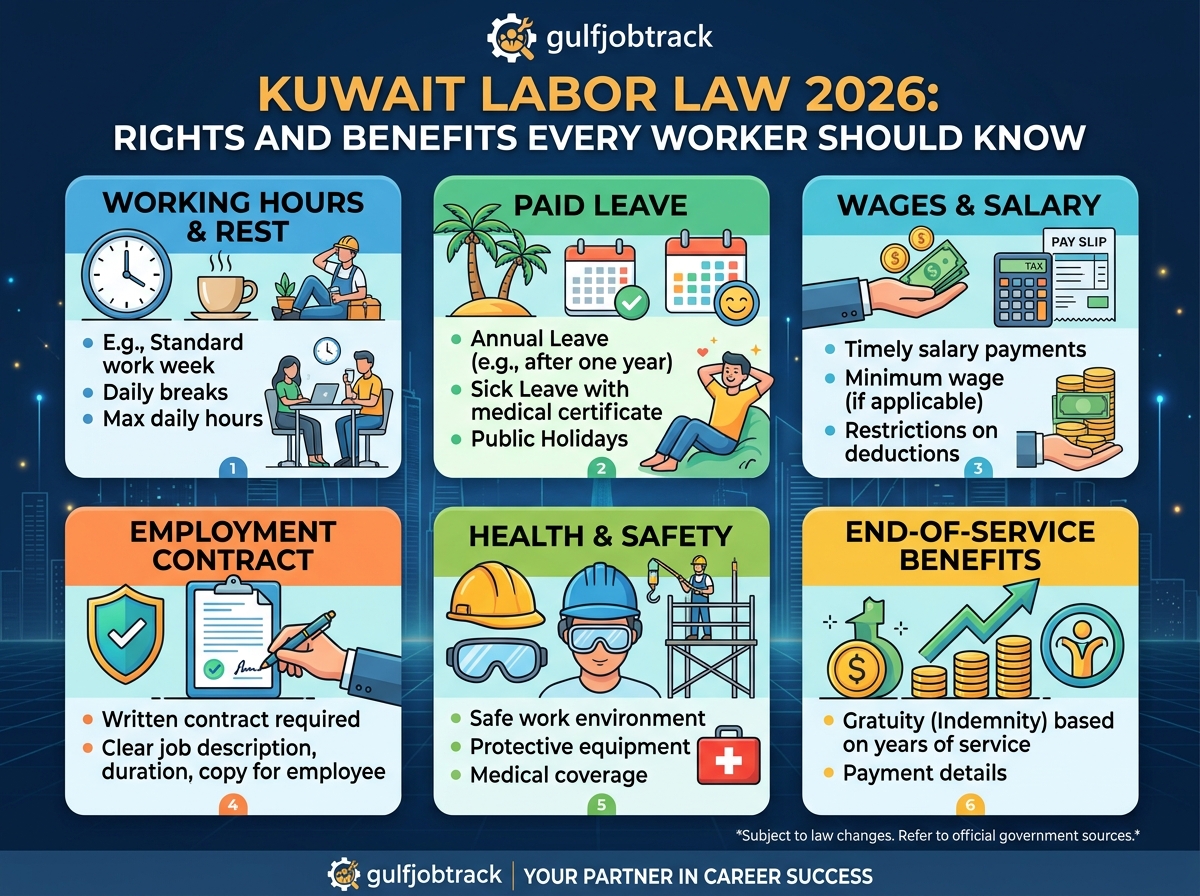
Kuwait is home to a large expatriate workforce employed across industries such as construction, healthcare, engineering, logistics, hospitality, retail, and information technology. Understanding labor laws is essential for both employees and employers to ensure compliance with workplace regulations and to protect workers’ rights.
Whether you are planning to move to Kuwait for work or are already employed in the country, knowing your legal rights can help you avoid workplace disputes and better understand your responsibilities.
This guide explains the key aspects of Kuwait Labor Law in 2026, including working hours, overtime rules, annual leave, end-of-service benefits, and employee protections.
Understanding Kuwait Labor Law
Kuwait’s labor regulations are designed to govern the relationship between employers and employees while ensuring fair treatment in the workplace.
Labor laws generally cover:
- Employment contracts
- Working hours
- Overtime compensation
- Leave entitlements
- Workplace safety
- Contract termination
- End-of-service benefits
- Employee protections
Workers should always consult official government sources for the latest legal updates.
Official Government Resources
Employment Contracts in Kuwait
Before starting work, employees should receive a written employment contract.
A standard employment contract typically includes:
- Job title
- Salary details
- Working hours
- Contract duration
- Leave entitlements
- Benefits and allowances
- Termination conditions
Workers should carefully review all contract terms before signing.
For workers planning to relocate, read our related guide:
Internal Link: Kuwait Work Visa 2026: Complete Guide for Foreign Workers
Working Hours in Kuwait
Working hours vary depending on the employer and industry.
In general, labor regulations establish limits on working hours to protect employee welfare and productivity.
Key Considerations
- Daily working schedules should be clearly stated in the employment contract.
- Employers must comply with applicable labor regulations.
- Workers may be entitled to rest periods during the workday.
- Special rules may apply during certain periods and for specific industries.
Employees should discuss work schedules with employers before accepting job offers.
Overtime Rules
Many sectors require additional working hours during busy periods.
When employees work beyond standard working hours, overtime regulations may apply.
Overtime Considerations
- Overtime should generally be authorized by the employer.
- Additional compensation may be required according to labor regulations.
- Overtime calculations can vary depending on the day and working conditions.
Workers should maintain records of overtime hours whenever possible.
Annual Leave Entitlements
Paid annual leave is an important employee benefit in Kuwait.
Annual leave allows workers to rest, travel, and spend time with family while maintaining employment status.
Benefits of Annual Leave
- Improved work-life balance
- Better productivity
- Reduced workplace stress
- Enhanced employee well-being
Employees should confirm leave policies directly with their employer and review contract terms carefully.
Public Holidays
Employees may be entitled to official public holidays recognized in Kuwait.
Public holiday regulations can vary depending on:
- Industry
- Employment contract
- Nature of work
- Operational requirements
Workers should review company policies regarding holiday schedules and compensation.
Sick Leave Benefits
Employees who are unable to work due to illness may qualify for sick leave benefits.
Common Requirements
- Medical documentation
- Approved medical certificates
- Compliance with employer procedures
Workers should notify employers promptly when unable to attend work due to illness.
End-of-Service Benefits
One of the most important provisions under Kuwait labor regulations is the end-of-service benefit system.
This benefit is typically provided when an employee completes their employment period and leaves the organization according to applicable labor rules.
Factors That May Affect Benefits
- Length of service
- Employment contract terms
- Reason for separation
- Applicable labor regulations
Employees should request detailed information from employers regarding benefit calculations.
Workplace Safety and Employee Protection
Employers are generally responsible for maintaining a safe work environment.
Worker Protection Measures
- Safe workplace conditions
- Appropriate safety equipment
- Health and safety training
- Protection from workplace hazards
Industries such as construction, manufacturing, and logistics often have additional safety requirements.
Employees should report unsafe working conditions through appropriate channels when necessary.
Employee Rights in Kuwait
Foreign and local employees may have various workplace rights protected by labor regulations.
Important Rights Include
- Receiving agreed wages
- Working under lawful contract conditions
- Access to leave benefits
- Safe workplace conditions
- Fair treatment by employers
- Access to legal complaint procedures
Understanding these rights helps workers make informed employment decisions.
Contract Termination Rules
Employment contracts may end for various reasons, including:
- Contract completion
- Resignation
- Mutual agreement
- Employer termination
- Retirement
Before Leaving a Job
Employees should:
- Review contract obligations.
- Understand notice requirements.
- Confirm final salary payments.
- Clarify end-of-service benefits.
- Obtain employment records if needed.
Proper planning can help avoid unnecessary disputes.
How Workers Can Protect Themselves
To ensure a positive employment experience in Kuwait:
1. Keep Copies of Documents
Maintain copies of:
- Passport
- Work permit
- Employment contract
- Salary records
- Benefit documentation
2. Understand Your Contract
Never sign documents without fully understanding the terms.
3. Use Official Sources
Always rely on official government information for labor regulations and updates.
4. Verify Employers
Before accepting a job offer:
- Confirm company legitimacy.
- Review employment terms carefully.
- Verify sponsorship arrangements.
Common Mistakes Foreign Workers Should Avoid
Many employment issues arise because workers:
- Accept verbal agreements only.
- Fail to review contracts.
- Ignore visa requirements.
- Do not maintain employment records.
- Rely on unofficial information sources.
Careful preparation can prevent many workplace problems.
Related Kuwait Career Guides
For additional employment information, read:
Internal Links
- Kuwait Work Visa 2026: Complete Guide for Foreign Workers
- Top High-Paying Jobs in Kuwait for Foreign Workers in 2026
- Qatar Jobs for Foreign Workers
- Saudi Arabia Jobs Guide
- UAE Career Opportunities
- Gulf Job Visa Guide
Official Labor Information Resources
For the latest employment regulations and worker guidance:
Conclusion
Understanding Kuwait Labor Law 2026 is essential for anyone planning to work in the country. Knowledge of employment contracts, working hours, overtime regulations, leave entitlements, workplace protections, and end-of-service benefits can help workers make informed decisions and protect their interests.
Before accepting any job offer, carefully review employment terms and rely on official government resources for the latest labor law information. Staying informed about your rights and responsibilities can contribute to a successful and rewarding career in Kuwait.